
Somalia Annual Human Rights Report 2025
Report by: Coalition of Somali Human Rights Defenders (CSHRD)
Reporting Period: January – December 2025
Date: January 2026
Executive Summary
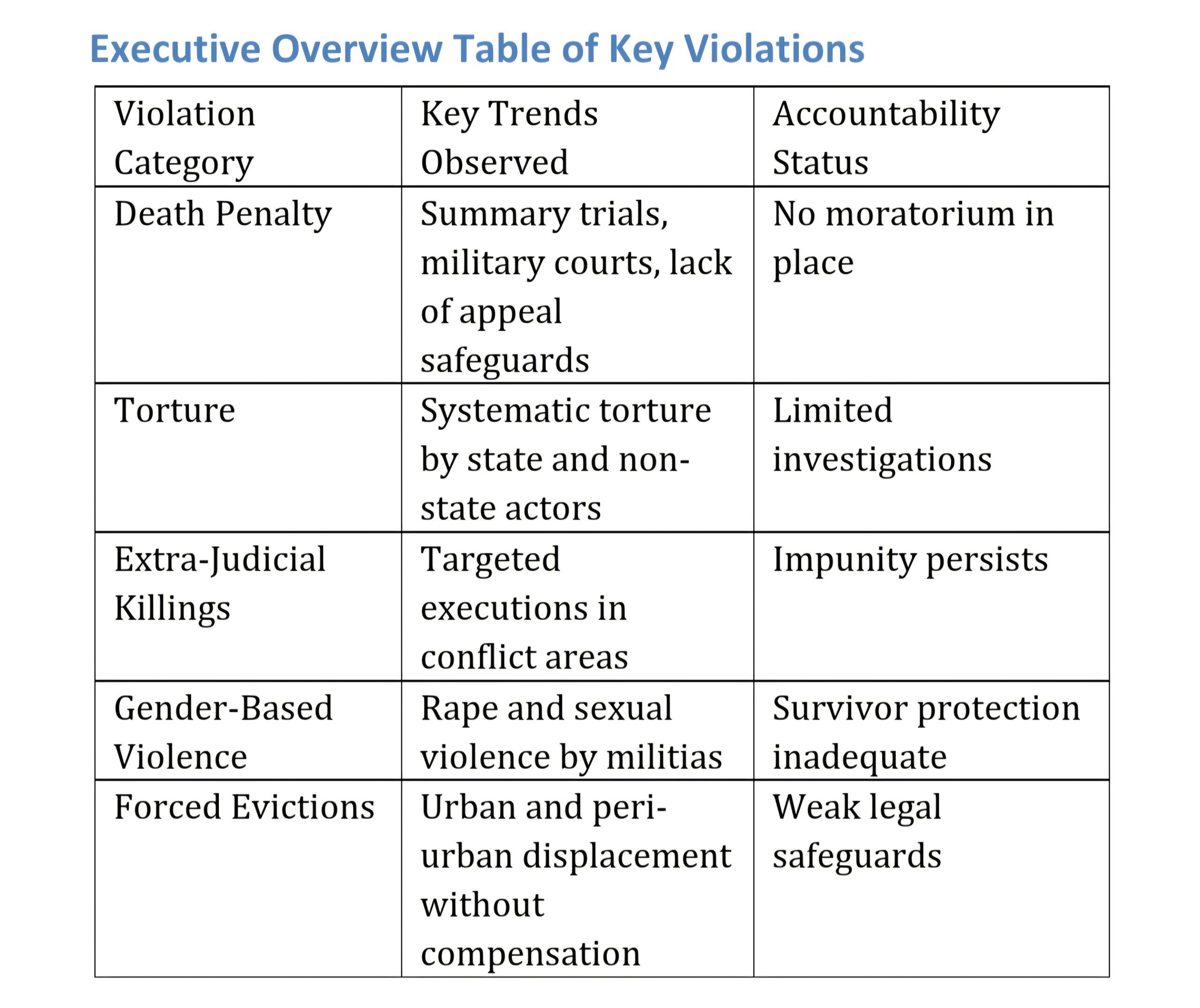
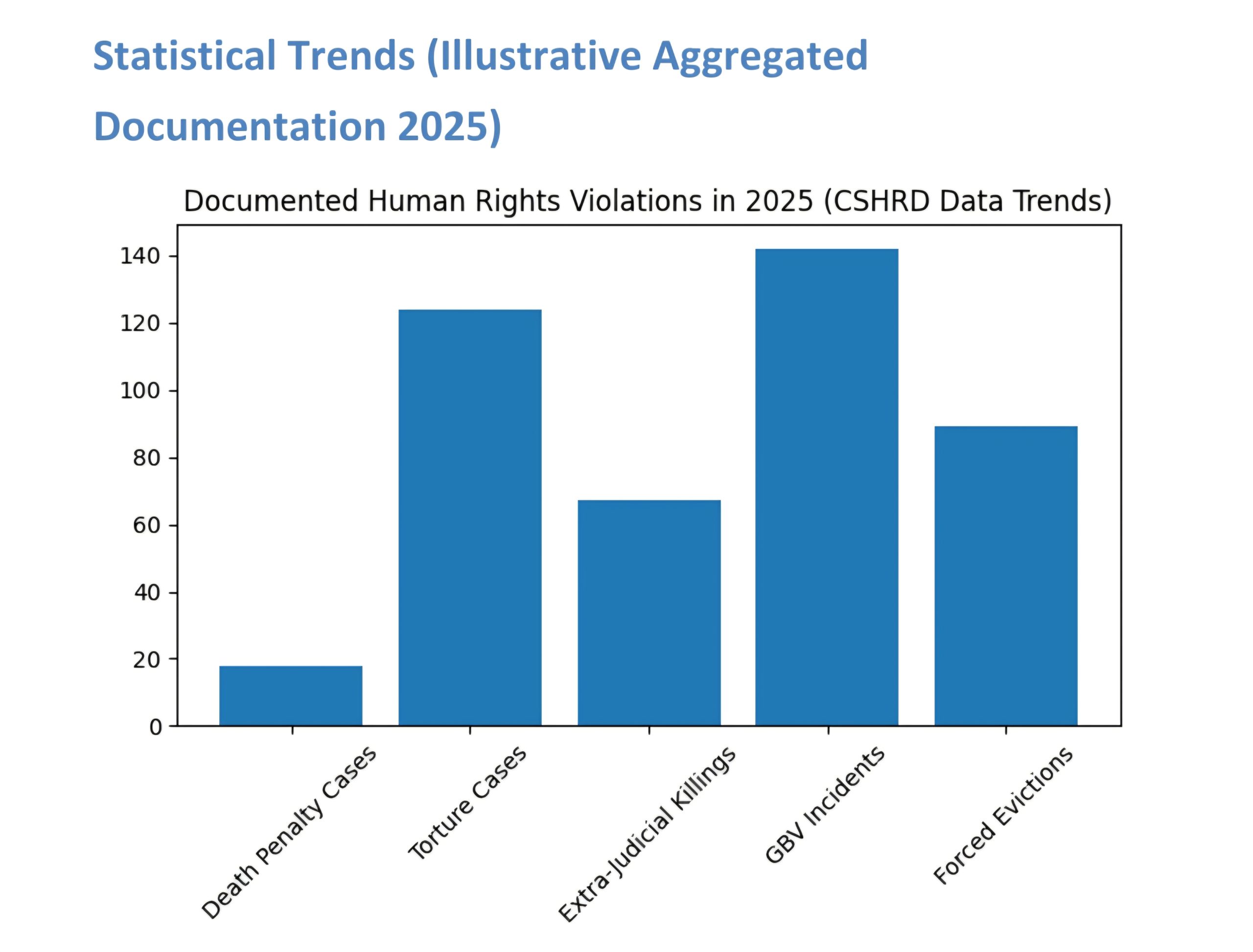
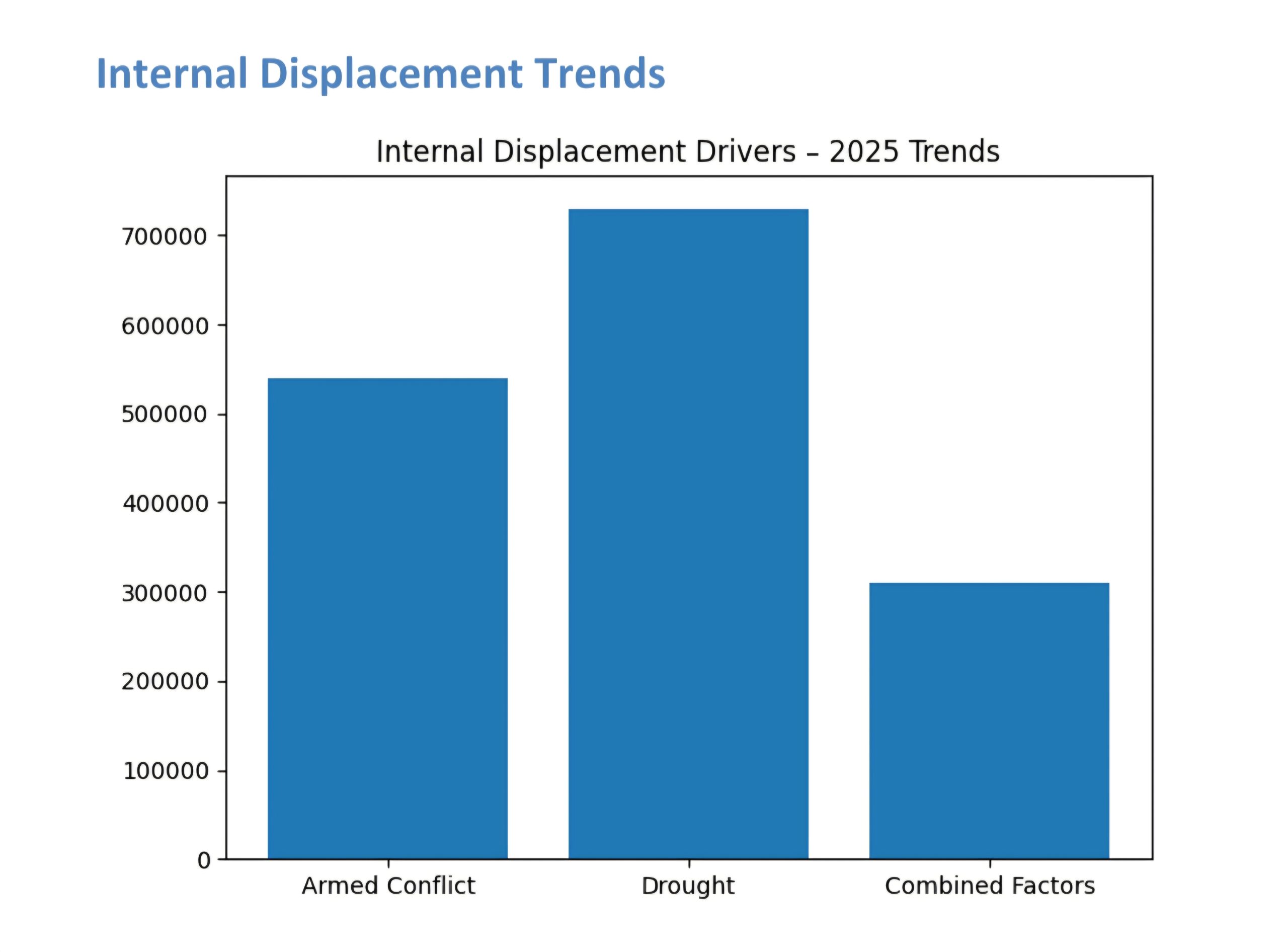
This report documents grave human rights violations committed in Somalia during 2025, including abusive use of the death penalty, torture, extra-judicial killings, conflict-related sexual violence, violations against women and children, enforced evictions, and mass displacement. In 2025, Human Rights Defenders (HRDs) in Somalia operated in an increasingly hostile and high-risk environment marked by systematic intimidation, violence, and repression. A total of 112 HRDs were documented as having been targeted during the reporting period.
Patterns of Violations Against HRDs
HRDs faced a combination of:
• Cyber-attacks and digital surveillance, including hacking, coordinated online harassment campaigns, and doxxing.
• Targeted killings and assassination attempts, particularly against defenders documenting conflict-related abuses.
• Physical violence and arbitrary detention by state and non-state actors.
• Death threats and intimidation, often delivered through anonymous calls, armed visits, or social media threats.
• Legal harassment, including fabricated charges, misuse of counter-terrorism laws, and prolonged pre-trial detention.
• Smear campaigns, especially against Women Human Rights Defenders (WHRDs), portraying them as “anti-cultural” or “foreign agents.”
Disproportionate Impact on Women Human Rights Defenders (WHRDs)
The majority of those targeted in 2025 were Women Human Rights Defenders (WHRDs), particularly those working on:
• Gender-based violence (GBV) documentation
• Sexual and reproductive health rights
• Minority and Indigenous community rights
• Accountability for security sector abuses
WHRDs faced intersectional threats combining political retaliation with gender-based harassment, including sexualized threats and online abuse.
CSHRD Response and Protection Efforts
The Coalition of Somali Human Rights Defenders (CSHRD) provided assistance and protection to 97 out of the 112 targeted HRDs. Support included:
• Emergency relocation and safe housing
• Legal aid and representation
• Digital security training and cyber protection support
• Psychosocial assistance
• International advocacy and urgent appeals
• Engagement with diplomatic missions and UN mechanisms
Despite these interventions, the shrinking civic space, weak rule of law, and entrenched impunity continue to expose HRDs to severe risk. The targeting of 112 HRDs in 2025 reflects a systematic pattern of repression aimed at silencing independent human rights work in Somalia. Without urgent legal reform, protection mechanisms, and accountability measures, HRDs—particularly WHRDs—will remain at grave risk.
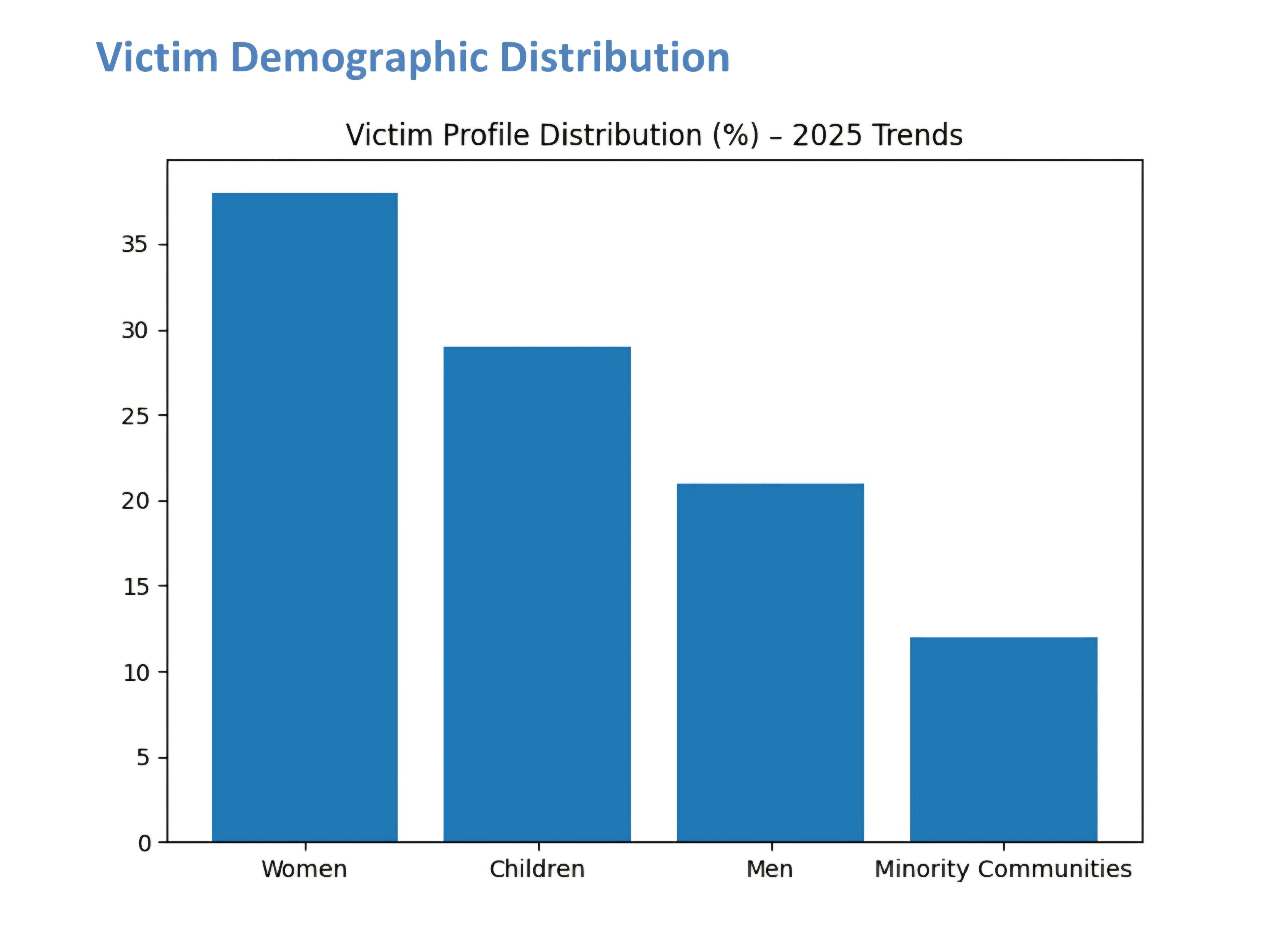
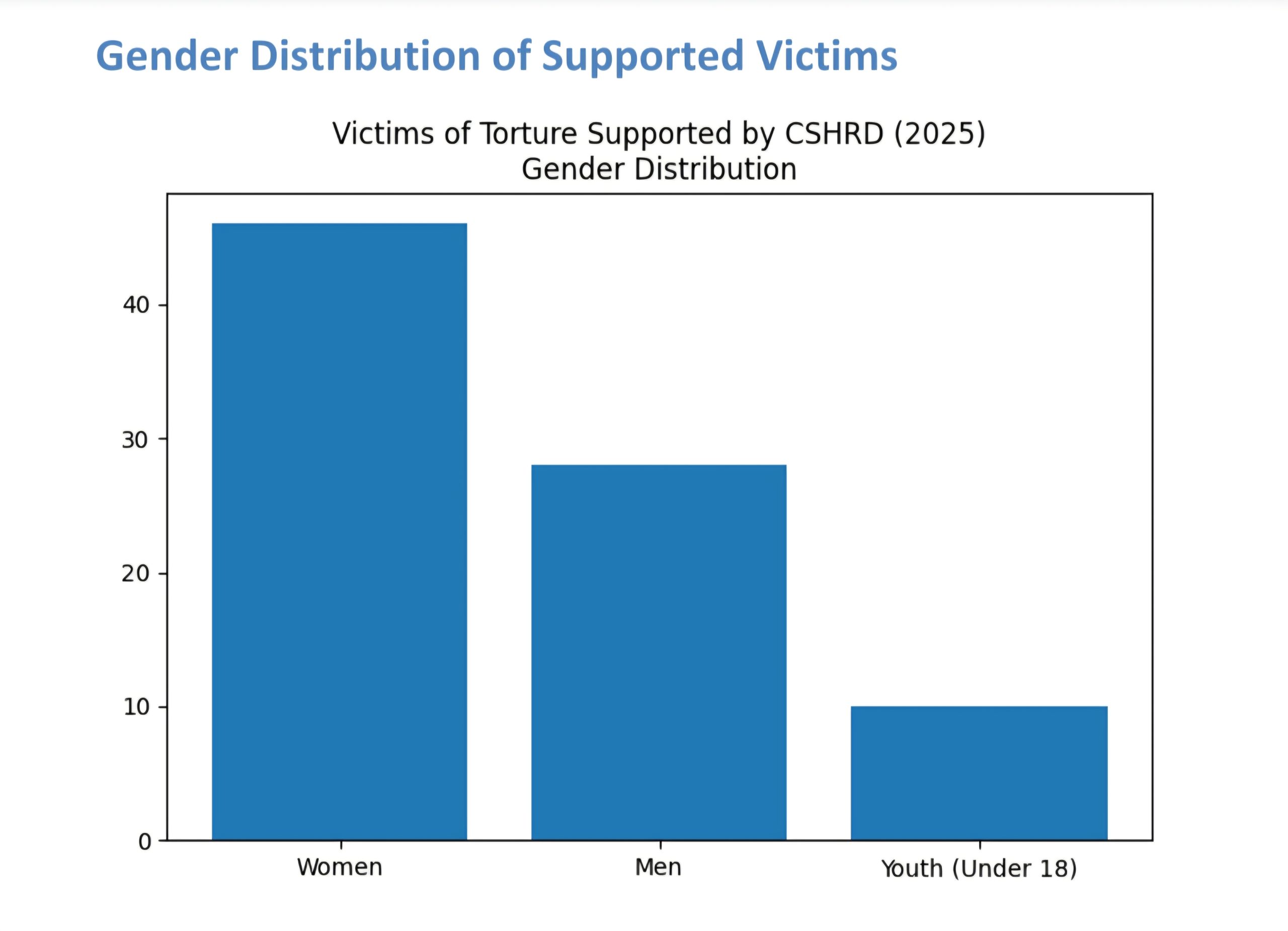
In 2025, the Coalition of Somali Human Rights Defenders (CSHRD) supported a total of 84 victims of torture through its rehabilitation and livelihoods support program. Victims included women, men, and youth affected by torture committed by both state and non-state actors.
Program Interventions
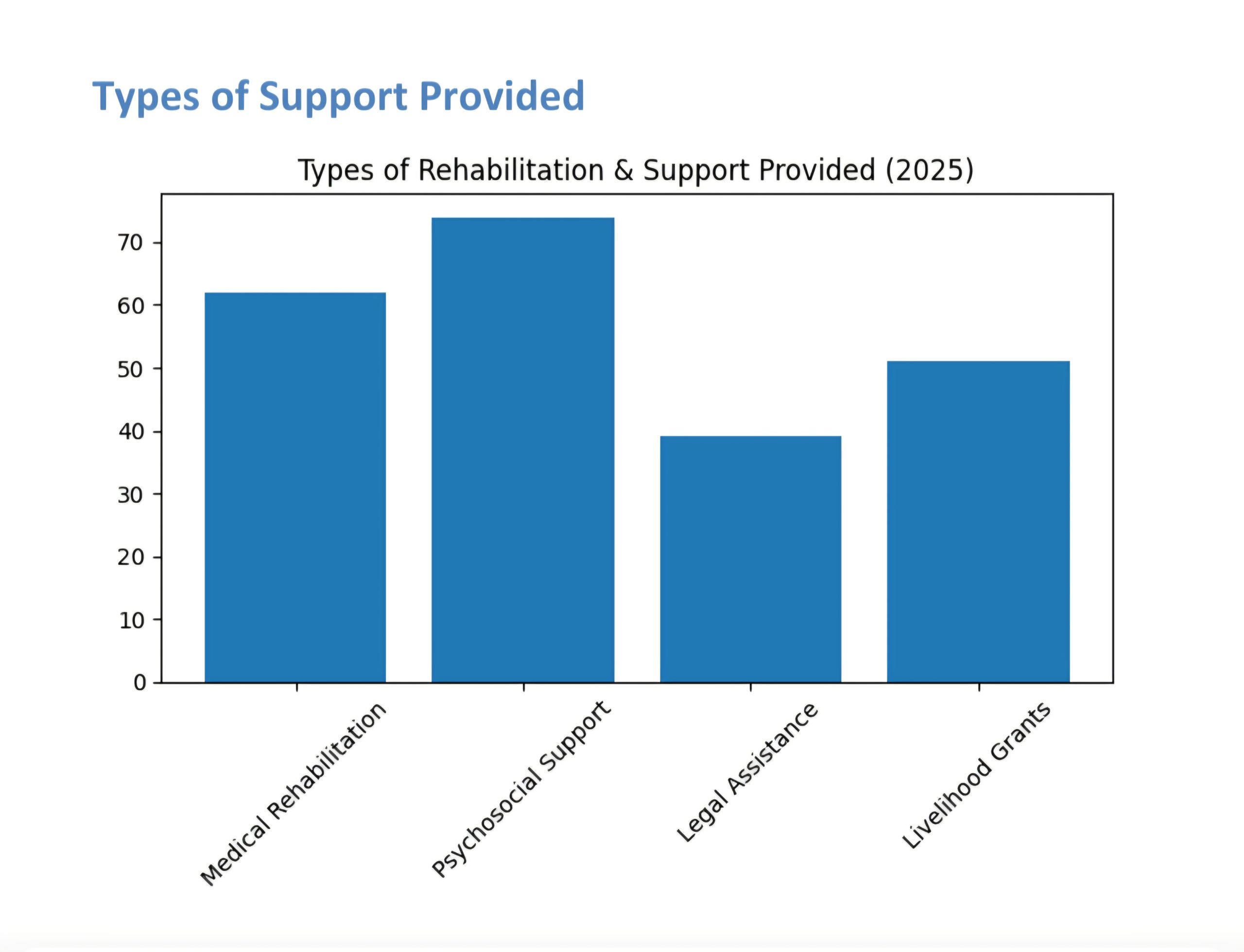
Key interventions provided by CSHRD included:
– Medical rehabilitation and referral services
– Psychosocial counseling and trauma-informed care
– Legal assistance and documentation support
– Livelihood grants to restore economic stability and resilience
Impact Overview
The rehabilitation and livelihoods support program contributed to improved physical recovery, enhanced psychosocial wellbeing, strengthened access to justice, and increased economic resilience among survivors. Livelihood grants enabled beneficiaries to restart small businesses, reduce dependency, and regain dignity following severe human rights violations.
I. Legal Framework Analysis
Somalia is bound by international human rights obligations under treaties including the ICCPR, CAT, CEDAW, and CRC. The Provisional Federal Constitution prohibits torture and guarantees the right to life and fair trial. However, implementation gaps persist.
Key Gaps Identified:
– Continued executions without full fair trial guarantees (ICCPR Articles 6 & 14).
– Lack of criminalization and accountability mechanisms for torture (CAT).
– Inadequate protection against gender-based violence (CEDAW).
– Ongoing recruitment and use of children in armed conflict (CRC Optional Protocol).
II. Annex: Documented Case Summaries (Confidential Sources Withheld)
Case 1 – Torture in Detention (Mogadishu)
A male detainee reported electric shocks and severe beatings during interrogation by security forces. Medical documentation confirmed consistent injuries.
Case 2 – Extra-Judicial Killing (Yaaqbiriweyne District)
Witnesses reported summary execution of civilians by state-aligned militia. Families denied access to judicial remedy.
Case 3 – Conflict-Related Sexual Violence
A displaced woman reported gang rape by armed militia members. No arrests or investigations have been initiated.
Case 4 – Child Recruitment
A 15-year-old boy was forcibly recruited by an armed group and used in logistical operations.
Case 5 – Forced Eviction (Peri-Urban Settlement)
Over 300 households were evicted without notice or compensation, resulting in secondary displacement.
III. Universal Periodic Review (UPR) – Stakeholder Submission Format
This section aligns findings with UPR reporting guidelines, focusing on thematic concerns and actionable recommendations.
Priority Recommendations:
1. Impose an immediate moratorium on the death penalty and replace it with Diyya as stated in Sharia.
2. Criminalize and independently investigate torture.
3. Prosecute perpetrators of extra-judicial killings.
4. Establish survivor-centered GBV response mechanisms.
5. End recruitment of children and strengthen reintegration programs.
6. Adopt legal safeguards against forced evictions.
7. Ratify Rome Statue and join ICC to end impunity
8. Disband the recently established so called “independent national human rights commission” for violations of paris principles and being politicised.
9. Held state militia leaders like Ahmed Gaashaan in Yaaqbiriweyne area accountable for serious crimes against humanity and systematic GBV and massacre of civilians in November 2025.
IV. CEDAW Shadow Report Section
Women face systematic gender-based violence, particularly in armed conflict settings. Protection services remain limited, especially for internally displaced women.
CEDAW-Specific Recommendations:
– Criminalize all forms of conflict-related sexual violence.
– Ensure access to medical, psychosocial, and legal services.
– Protect women human rights defenders.
– Increase women’s participation in peace and security decision-making.
V. CRC Alternative Report Section
Children continue to be affected by armed conflict, recruitment, displacement, and limited access to education.
CRC-Specific Recommendations:
– Implement zero tolerance for child recruitment.
– Establish rehabilitation and reintegration programs.
– Ensure access to education in displacement settings.
– Strengthen birth registration systems.
CSHRD Research Team
For media questions, please contact: Secretary@cshrds.org